

The Long Journey Home: Why Africa’s Looted Treasures Must Be Returned
The return of a Benin artefact by the Netherlands is welcome, but the piecemeal recovery of Africa’s looted treasures exposes a historical injustice that remains unfinished.
By Ayo-Daniel O. Ayodeji
On 21 October 2026, the Netherlands returned a Benin artefact to the Oba of Benin, Oba Ewuare II, 129 years after the invasion of the ancient Kingdom of Benin. The presentation took place at the Oba’s Palace in Benin City during celebrations marking the traditional ruler’s tenth coronation anniversary. The return represents a welcome gesture, but it also confronts the world with an uncomfortable question: why should a people wait more than a century to recover their own cultural inheritance?
The significance of this return extends far beyond a single artefact. It is a reminder of the vast cultural wealth removed from Africa during colonial conquest, the generations separated from their heritage, and the continuing struggle to persuade foreign institutions to relinquish objects whose presence in their collections can be traced to violence, coercion and unequal colonial relationships.
The Netherlands’ gesture deserves recognition. But recognition must not become an excuse for complacency. One returned artefact cannot compensate for thousands that remain scattered across foreign museums, galleries and private collections.
Africa’s cultural restitution story is not yet a story of completion. It is a story of recovery in fragments.
When conquest became cultural plunder
To understand the injustice, one must return to the colonial era, when European expansion across Africa was accompanied not only by territorial occupation and the exploitation of natural resources but also by the systematic removal of cultural objects.
The Kingdom of Benin, in present-day Edo State, Nigeria, offers one of the clearest examples.
In February 1897, British forces invaded Benin City, ransacked the royal palace and looted thousands of objects. The military operation, commonly called the Benin Punitive Expedition, brought devastation to the kingdom and led to the exile of Oba Ovonramwen, the reigning monarch.
The objects seized included intricately cast brass and bronze plaques, commemorative heads, royal regalia, ivory carvings and sculptures. These were not merely decorative pieces. They preserved the kingdom’s history, recorded its royal lineage, represented its religious traditions and reflected the exceptional technical abilities of its artists.
According to National Museums Scotland, British troops removed between 3,000 and 5,000 objects from Benin during the invasion. Many were transported to Britain, sold through auctions or passed into the hands of military officers, dealers, collectors and museums across Europe and North America.
The subsequent dispersal of these objects created a peculiar historical arrangement: the cultural products of an African civilisation became celebrated possessions in institutions thousands of kilometres from the people whose ancestors created them.
The objects travelled. Their history travelled with them, but not always in the manner it deserved.
In many cases, the circumstances of their acquisition were obscured by the language of collecting, acquisition and museum curation. The violence that placed them in foreign hands became a distant footnote, while their artistic excellence became a source of institutional prestige.
This was one of colonialism’s enduring contradictions. African societies were frequently represented as lacking civilisation, yet the artistic achievements of those same societies were considered valuable enough to acquire, exhibit and preserve in the museums of the colonial powers.
The Benin Bronzes, as the collection is commonly known, expose that contradiction with particular force.
More than art behind glass
A museum may describe an object by its material, date, dimensions and artistic technique. Those details are important, but they do not tell its entire story.
An artefact can be a historical record, a religious object, a symbol of political authority and a link between generations. It may embody the memory of a community and the knowledge of artists whose techniques were developed and transmitted within a particular civilisation.
For the people of Benin, the objects removed in 1897 belong to a cultural landscape that cannot be separated from the history of the kingdom and its royal institution.
Their significance therefore exceeds their market value.
A royal plaque is not simply a piece of metal. A commemorative head is not merely an example of exceptional craftsmanship. An ivory carving may carry meanings that cannot be fully communicated through a museum label written for an audience unfamiliar with the traditions that produced it.
The loss is consequently twofold.
First, there is the physical removal of the objects from their original setting. Second, there is the interruption of the relationship between those objects and the communities for whom they carry historical, spiritual and cultural meaning.
An African artefact displayed in Europe may educate an international audience about African artistic traditions. But its presence abroad does not automatically settle the question of whether it should remain there.
Preservation and rightful ownership are different questions. So are public access and cultural justice.
A foreign institution may possess the resources to conserve an object, but that capacity alone cannot establish an unlimited moral entitlement to keep it.
Nor should the restitution debate be reduced to an argument between preserving art and returning it. African institutions and cultural authorities have a legitimate role in determining how their heritage should be preserved, interpreted and made accessible. The is already evidential in Edo State where the Oba of Benin is the primary custodian of generational artefacts and cultural objects.
The central issue is not whether these works deserve preservation. It is whether preservation must continue to be used as a justification for retaining objects acquired through documented colonial violence.
The long journey home
The return of the Benin artefact by the Netherlands is part of a wider movement to reconsider the ownership of cultural objects removed during colonial rule.
One important development came in February 2025, when the Dutch government announced the return of 113 Benin objects from its state collection following a request from Nigeria. The municipality of Rotterdam also agreed to return six additional objects.
The Dutch government explicitly acknowledged that British soldiers had looted the objects in 1897 and that they should not have ended up in the Netherlands. The formal handover of the 119 objects took place in Lagos in June 2025. Four objects were to remain on display at the Wereldmuseum under a loan agreement.
That decision matters because it demonstrates that restitution can proceed through formal government policy, historical investigation and cooperation between the country of origin and the institutions holding the objects.
The Netherlands’ approach also illustrates an important distinction: returning an object does not necessarily require abandoning international museum cooperation. Research partnerships, temporary loans, conservation support and shared exhibitions can continue, provided that they respect the rights and decisions of the rightful custodians.
Germany has also taken a significant step. In 2022, ownership of 514 Benin Bronzes from Berlin’s Ethnological Museum was transferred to Nigeria. Some objects remained in Berlin on loan, demonstrating how restitution and continued exhibition can coexist under agreed arrangements.
In February 2026, the University of Cambridge announced that it had transferred legal ownership of 116 Benin artefacts to Nigeria’s National Commission for Museums and Monuments, operating under a management agreement with the Benin Royal Palace.
However, the distinction between legal ownership and physical possession remains important: Cambridge stated that arrangements for the physical transfer of most of the objects would follow, while 17 would remain on loan and on display at its Museum of Archaeology and Anthropology for an initial period of three years.
These developments show that restitution is no longer an abstract demand confined to activists and cultural historians. It is increasingly being addressed through institutional decisions, diplomatic negotiations and formal transfers of ownership.
Yet they also reveal how complicated and uneven the process remains.
An institution may recognise a claim, agree to transfer ownership, retain some objects on loan and arrange the physical return of the remainder at a later date. Another may require extensive provenance research or a formal request from a national authority.
For the communities seeking the recovery of their heritage, these distinctions matter enormously.
Ownership on paper is progress. An artefact physically returned to its cultural home is another achievement. A sustainable system that prevents future dispossession and supports the preservation of returned objects is a further responsibility.
These are related but distinct stages of restitution. They should not be confused.
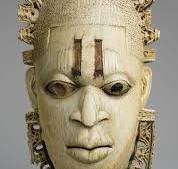
The museums that have yet to let go
Despite these advances, significant collections of Benin artefacts remain outside Nigeria.
The British Museum acknowledges that many of its objects from the Kingdom of Benin were looted during the 1897 expedition. Its collection records include objects whose provenance connects them directly to the invasion. The institution has participated in the Benin Dialogue Group, an initiative bringing together European museums and Nigerian partners to discuss the future of Benin collections and the development of museums in Benin City.
The Pitt Rivers Museum at the University of Oxford also acknowledges the looted status of material from Benin and has described its engagement with the Nigerian government, the Benin Royal Court and other stakeholders. The university supported in principle a claim for the return of 97 objects, but the museum’s published account indicated that the process remained pending as of summer 2026.
These examples illustrate the uneven pace of restitution.
Some institutions have transferred ownership or returned objects physically. Others have accepted the historical circumstances of acquisition but continue to retain collections while legal, administrative or institutional questions are addressed.
The reasons for delay vary. They can include disputes over legal authority, the interpretation of museum legislation, uncertainty about provenance, the need for formal claims and disagreements about whether objects should be returned outright or made available through long-term loans.
Such considerations deserve examination on their individual merits. Not every artefact in a foreign collection has the same history, and the circumstances of each acquisition should be established through careful research.
But where the evidence demonstrates that objects were taken during a military invasion, the burden should not fall indefinitely on the dispossessed community to prove that its heritage deserves to come home.
Acknowledging an injustice without taking meaningful steps to remedy it risks turning historical recognition into a substitute for restitution.
A museum cannot fully resolve the moral implications of looting merely by documenting it accurately, explaining it in an exhibition or expressing regret.
Those actions matter. They should accompany, not replace, a serious consideration of return.
The many routes to restitution
There is no single mechanism through which all African artefacts can be recovered. Governments, museums and cultural authorities have adopted different approaches, and each offers lessons for future negotiations.
First, direct government-to-government agreements.
Nigeria’s negotiations with the Netherlands demonstrate how a formal request, historical research and diplomatic cooperation can lead to the transfer of objects from a foreign state collection.
Such agreements can establish clear responsibilities, identify the objects concerned and provide an official framework for their transfer.
Second, museum-led restitution.
Institutions can independently review their collections, investigate provenance and decide that particular objects should be returned. The University of Cambridge’s decision to transfer ownership of 116 Benin artefacts is an example of a university institution taking this route.
This approach matters because cultural objects are not held exclusively by national governments. Universities, municipal authorities, religious institutions and private organisations may also possess material that requires examination.
Third, legal and administrative claims.
Where institutions are constrained by domestic laws, governments may need to pursue statutory approvals, regulatory decisions or other formal procedures. Such processes can be lengthy, but they provide a route for addressing the legal barriers that some institutions identify.
Fourth, negotiated loans and shared exhibitions.
Some arrangements allow objects to remain temporarily in foreign museums after ownership has been transferred, or permit the objects to travel between institutions under agreed terms.
Such arrangements may support research and public access. However, they must not become a device for making restitution nominal rather than substantive.
A loan is not the same as a return of ownership. A transfer of ownership is not necessarily a physical return. These distinctions must remain transparent to the public.
Fifth, provenance research and international cooperation.
Digital databases, archival investigations and collaboration between museums and communities of origin can help establish where objects came from, who acquired them and under what circumstances.
Projects such as Digital Benin are particularly important because they help reconnect dispersed collections and historical records with the history of the kingdom that produced them.
The objective should be to establish a fuller account of Africa’s cultural heritage, not merely to negotiate the return of the objects that have already attracted international attention.
Finally, wider reparative measures.
Restitution should form part of a broader discussion about the consequences of colonial dispossession. This can include conservation training, support for African museums, digitisation, research partnerships and the return of archives and historical records.
Such cooperation can be valuable, but it should not be confused with compensation for the original loss. Training programmes and museum partnerships do not, by themselves, settle ownership claims.
Nor can cultural restitution alone repair the full economic, political and social consequences of colonial rule.
The challenge is to recognise that returning stolen cultural property is an essential part of addressing a specific historical injustice, while considering other reparative questions on their own terms.
The problem with returning Africa’s heritage in bits
There is something troubling about the slow, fragmented nature of these returns.
Objects taken during a single invasion were dispersed across countries and institutions. Yet their recovery can require years of negotiation with each individual custodian.
One government returns a collection. Another transfers ownership. A university approves a claim. A museum agrees to a loan. Somewhere else, a private collector may still possess an object whose history has not been adequately investigated.
Meanwhile, the communities whose heritage was removed are expected to celebrate each small victory while continuing to wait for the rest.
Every return deserves acknowledgement. The Netherlands should be commended for its decisions to return Benin objects, and institutions that have taken similar steps should be encouraged to continue.
But gratitude must not become a substitute for accountability.
The return of one artefact after 129 years is both a moment of hope and an indictment of the time that has elapsed. It should prompt us to ask why cultural justice has moved so slowly when the history of the original dispossession is already extensively documented.
The passage of time does not make wrongful acquisition legitimate. Neither does the fact that an object has spent generations in a foreign museum.
Nor should the age of an artefact or the prestige of its current custodian determine whether its original owners have a credible claim to its return.
If an institution can acknowledge that an object was looted, it should be prepared to explain publicly what practical steps it is taking to resolve the claim.
The international community must move beyond declarations of good intention towards transparent inventories, clear procedures, reasonable timelines and measurable progress.
What must Nigeria and other African governments do?
The responsibility for restitution does not rest solely with foreign institutions. African governments must also demonstrate that they can manage the process strategically and protect the objects once they return.
For Nigeria, this means maintaining a comprehensive, publicly accessible register of Benin artefacts held abroad, including their locations, ownership status, documented provenance and the institutions responsible for them.
The government and the National Commission for Museums and Monuments should continue working with the Benin Royal Palace, Edo State authorities, researchers and relevant communities to establish clear priorities for recovery.
Requests should be supported by credible documentation, carefully prepared claims and sustained diplomatic engagement. Where institutions have acknowledged the history of looting, Nigeria should press for clear timetables and explanations of any remaining barriers to physical transfer.
Equally important is the question of custody after restitution.
The returned objects should be properly documented, conserved and protected. Their display should be supported by research and interpretation that recognise the expertise of Benin historians, traditional authorities, artists and other relevant cultural stakeholders.
There must also be transparency about where the objects are kept, who is responsible for them and how decisions about their use and display are made.
Restitution should not simply move cultural treasures from one institution to another. It should restore meaningful access to the history and heritage they embody.
Nigeria should also strengthen cooperation with other African countries facing similar challenges. The removal of cultural property was not confined to Benin City, nor was it restricted to Nigeria.
Across West Africa, colonial conquest, military expeditions, unequal trading relationships and other forms of coercion contributed to the dispersal of cultural objects. In different places and periods, artefacts were removed from communities, royal courts, religious institutions and archaeological sites.
The recovery of this heritage requires country-specific research and careful attention to the circumstances of each case. Yet African governments can benefit from sharing legal expertise, archival research, conservation knowledge and diplomatic strategies.
A coordinated African approach would make it easier to identify patterns of acquisition, document claims and press institutions to adopt consistent and transparent restitution policies.
The goal should not be to treat every foreign museum as an adversary. It should be to establish a relationship in which African cultural rights are recognised and international cooperation is built on fairness rather than inherited inequalities.
Who has the right to tell Africa’s story?
There is a larger question beneath the debate over ownership: who has the authority to preserve, interpret and present African history?
For too long, the international circulation of African artefacts has allowed audiences to encounter extraordinary works of African art without necessarily confronting the circumstances that placed them abroad.
Visitors may admire the technical brilliance of a Benin bronze while knowing little about the invasion that separated it from the kingdom that created it.
The object becomes evidence of African artistic achievement, but its removal becomes detached from the narrative.
Restitution offers an opportunity to correct this imbalance.
Returned objects can help African institutions develop exhibitions that place the works within their original historical and cultural contexts. They can support new research, inspire contemporary artists and provide younger generations with a more direct relationship to their heritage.
Their return also creates an opportunity for foreign museums to reconsider how they tell the stories of colonialism, collecting and cultural exchange.
Museums in Europe and North America can continue to play an important role in the international appreciation of African art. They can preserve objects, conduct research, host exhibitions and collaborate with African scholars and cultural institutions.
But the future of that relationship must be based on mutual respect.
The idea that an artefact must remain abroad because international audiences deserve to see it is insufficient on its own. African audiences also deserve to see their heritage, learn from it and determine how it is presented.
International access can be maintained through travelling exhibitions, digital collections, temporary loans and reciprocal partnerships. None of these arrangements requires treating permanent foreign possession as the default outcome.
The question is not whether the world should have access to African art. It is whether that access can be achieved without denying African communities their rightful place in deciding the future of their cultural inheritance.
Restitution must become a commitment, not a ceremony
The return of the Benin artefact by the Netherlands deserves to be remembered as part of the continuing effort to recover Africa’s stolen heritage.
But ceremonies are moments. Restitution is a process.
The applause at the Oba’s Palace should not obscure the thousands of other objects whose journeys home remain unresolved. Nor should it distract from the need to establish transparent and sustainable arrangements for the preservation and public appreciation of returned artefacts.
Foreign museums still holding objects removed from Benin and other African societies must be willing to examine their collections honestly, respond to credible claims and explain the practical steps they are taking.
African governments, in turn, must demonstrate that the recovery of cultural heritage is a continuing national priority rather than an occasional diplomatic achievement.
The international community should support this process through research partnerships, conservation assistance and transparent cooperation. But the language of partnership must not become another means of postponing difficult decisions about ownership.
There is also a moral responsibility to recognise that cultural restitution is not a favour bestowed by a generous custodian. Where an artefact was demonstrably looted, its return is a response to an injustice.
The Netherlands has taken meaningful steps in the case of Benin. Other institutions have also made decisions that move the process forward. Their actions demonstrate that change is possible when historical evidence, sustained advocacy and institutional will converge.
The next challenge is to make such progress more consistent, more transparent and less dependent on decades of campaigning.
After 129 years, the return of a single artefact is a reason for hope. It is also a reminder of how much remains unfinished.
Africa’s cultural heritage should not have to return home one object at a time, one negotiation at a time, across generations of waiting.
The task before the world is no longer merely to acknowledge that Africa’s treasures were taken. It is to ensure that the journey home becomes a serious, sustained and measurable commitment to justice.

The Workers Canada Doesn’t Have to Import: How Global Remote Hiring Is Redrawing the Labour Market
By Ayo-Daniel O. Ayodeji
As Canada reduces temporary-resident arrivals while businesses continue to seek skills, an alternative is becoming visible: rather than bringing every worker into the country, employers can increasingly send the work across borders.
For generations, the international movement of labour has been understood largely through the movement of people. A country needs workers; employers recruit abroad; governments issue work permits; and skilled professionals relocate in search of better opportunities. For many workers in developing economies, including Nigeria, the aspiration has been to secure employment in a wealthier country and of course, where possible, build a life there.
But technology is complicating that familiar arrangement.
A Canadian business that needs a software engineer, accountant, sales representative or administrative professional may not always need that person to live in Canada. With reliable internet access, cloud-based systems, digital payment infrastructure and remote collaboration tools, some work can cross international borders without the worker crossing them.
The implications are significant. Immigration remains one route through which Canada accesses international talent. But remote employment and outsourcing offer another possibility: bringing the work to the worker instead of bringing the worker to the work.
Public evidence already shows that Canadian businesses outsource services and that some employers advertise jobs specifically for professionals based in Nigeria. What remains uncertain is the overall scale of this practice, how quickly it is changing and whether it is materially reshaping Canada’s approach to meeting its labour needs.
Those questions obviously deserve closer examination.
The statistical evidence: outsourcing is already part of Canadian business
Statistics Canada’s Analysis of businesses outsourcing work in Canada, first quarter of 2025 provides a useful starting point.
The agency reported that 52.2 per cent of Canadian businesses had outsourced tasks, projects or short contracts during the preceding 12 months. Among businesses that outsourced, 19 per cent used third-party digital platforms, applications or websites to arrange that work.
Accounting, legal and other professional services were the most commonly outsourced category, reported by 36.5 per cent of businesses. Website or software development and computer programming accounted for 17 per cent, while information technology support accounted for 14.4 per cent. Sales and marketing support represented 10.1 per cent.
These figures do not mean that more than half of Canadian businesses employ workers abroad. Outsourcing can involve a domestic contractor, a Canadian service provider, a specialist hired for a short project or an overseas supplier. The data measures outsourcing, not exclusively offshore employment.
That distinction matters. Nevertheless, the figures demonstrate that contracting work outside a company’s direct workforce is already a significant feature of Canadian business operations. Digital services create opportunities for some of that work to be performed across national boundaries.
Statistics Canada has also collected data specifically on personnel employed outside Canada by Canadian businesses that are not affiliates of foreign parent companies. Tables 33-10-0194-01 and 33-10-0196-01 examine overseas personnel by industry, business size, region and activity.
The latter table includes activities such as marketing and sales, information and communication technology, professional services, engineering and research, logistics, call centres and management.
There is, however, a crucial limitation: these particular tables refer to fiscal year 2017. They establish that overseas employment has been measured across a range of business functions, but they cannot by themselves demonstrate the current size or growth of remote international hiring.
That data gap is part of the story. Canada has published evidence on outsourcing and historical overseas employment, but a clearer contemporary picture is needed to determine how much work Canadian businesses now assign to people working outside the country.
Sources: Statistics Canada, outsourcing analysis; Statistics Canada, Table 33-10-0196-01.
From sales to financial technology: examples from the Nigerian labour market
Public recruitment advertisements provide a closer look at what this international division of work can look like in practice.
An advertisement from Alberta-based Canadian LED Ltd., a company specialising in LED screens and related services, sought a full-time remote sales representative in Nigeria. The advertised responsibilities included qualifying business-to-business leads, contacting prospective customers, managing customer relationship management software, preparing proposals and negotiating deals.
The posting specified working hours aligned with Eastern Standard Time and advertised a monthly base salary of approximately C$500–C$1,000, alongside performance-based commission.
The significance is not simply that a Nigerian professional could work remotely for a Canadian company. It is that sales activity serving a Canadian business can be performed by someone who remains in Nigeria, operating within the employer’s preferred working hours.
A second example involves accounting. A recruitment advertisement from Goodwork sought an accountant in Nigeria for a Canadian-based financial-services organisation serving tax and nonprofit clients. The duties included Canadian tax work, bookkeeping, financial reporting and nonprofit accounting.
The advertisement described an organisation with more than 350 clients and professional activities connected to Ottawa and Toronto. The underlying employer should be independently identified and contacted before any stronger claim is made about the scale of its overseas workforce.
Nevertheless, the posting raises an important question about professional services: how much work traditionally associated with a Canadian office can be performed remotely by a suitably qualified professional abroad?
A third example moves the discussion into financial technology. A job advertisement attributed to Toronto-based Pharste Pay sought a security and DevOps engineer, with Nigeria- or Africa-based candidates preferred for a hybrid or remote arrangement. The role involved production infrastructure, sensitive credentials, deployment security and transaction systems.
This is a different category of work from basic administration or routine customer support. It illustrates that recruitment advertisements for Africa-based professionals can extend into specialised technical roles where security, expertise and trust are central to the employer’s requirements.
Other advertisements indicate that the model can encompass internal operations. Pro Job Hunter Ltd., which identifies itself in recruitment postings as a Canadian company, advertised remote Nigeria-based positions including a hiring manager, a team lead and a human resources administrative assistant.
These examples span sales, accounting, technology, recruitment and administration. They do not establish how many jobs have been filled, whether the arrangements are permanent or how widespread the model is across Canada. Nor do they prove that the positions would otherwise have gone to Canadian residents.
What they establish is narrower but still consequential: some Canadian businesses and Canadian-linked employers have publicly sought professionals who can perform specified work while remaining in Nigeria.
Sources: Canadian LED Ltd. job advertisement; Goodwork accounting advertisement; Pharste Pay DevOps advertisement; Pro Job Hunter recruitment advertisement. These are examples of published recruitment notices, not confirmation that the roles remain open.
Immigration policy and the economics of hiring
The question takes on added importance as Canada adjusts its immigration programme.
Under its 2026–2028 Immigration Levels Plan, the Canadian government set targets for new temporary-resident arrivals of 385,000 in 2026 and 370,000 in each of 2027 and 2028. The 2026 target includes 230,000 temporary workers and 155,000 students.
The plan seeks to reduce the number of temporary residents while continuing to attract talent and meet economic needs. The government has also maintained permanent-resident admission targets of 380,000 annually over the three-year period, with economic immigration accounting for the largest category.
These policies do not mean Canada has abandoned international recruitment. Nor do they demonstrate that employers are responding to immigration restrictions by hiring overseas workers remotely.
They do, however, create a relevant business question. When a company needs a particular skill, it has several possible choices: recruit someone already in Canada, bring a foreign professional into the country through an applicable immigration pathway, contract an outside service provider, or engage a worker who remains abroad.
Each option has different implications.
Bringing a worker to Canada may involve recruitment, immigration processing, relocation, accommodation and settlement considerations. Hiring abroad can avoid some relocation-related expenses, but it may introduce other costs involving payroll, taxation, employment law, data protection, currency movements, supervision and cross-border compliance.
A company may also choose remote international hiring because a specialist is difficult to find locally, because it needs additional capacity quickly, or because the work can be performed effectively across time zones. Cost may be a factor, but it should not be assumed to be the only one.
The relevant comparison is therefore not simply Canadian salaries against Nigerian salaries. It is the total cost, availability, quality and operational suitability of each hiring arrangement.
The worker’s opportunity—and the potential cost
For Nigerian professionals, the opportunity is obvious enough. Remote work can create access to international clients without requiring immediate migration. A qualified accountant, software engineer, sales professional or administrative specialist may be able to earn income from a foreign employer while remaining close to family and community.
It may also enable workers to gain international experience, develop specialised skills and build professional networks that would otherwise be harder to access.
But opportunity should not obscure the potential disadvantages.
A remote employee may have limited access to the benefits, pension arrangements, healthcare coverage or employment protections available to a comparable worker in the employer’s home country. A contractor may carry greater responsibility for taxes, equipment, insurance and periods without paid work. Exchange-rate volatility can reduce the real value of foreign-currency earnings, while differences in bargaining power may leave overseas workers with less leverage over pay and working conditions.
Working across time zones can also impose a personal cost. An arrangement designed around Canadian business hours may require a Nigerian worker to work late into the evening or overnight.
The advertised compensation in some recruitment notices raises further questions about wage differences. But isolated salary advertisements cannot establish the going rate for Nigerian professionals, and comparisons must account for the specific role, experience, benefits, hours and employment classification.
The central issue is whether this emerging form of international work produces a fair exchange: competitive value for the employer, meaningful opportunities for the worker, and transparent expectations for both.

What happens to Canadian workers?
Any serious assessment must also consider the effects on workers in Canada.
If an employer uses remote international recruitment to fill a role it cannot otherwise staff, the arrangement may expand the business, improve productivity or allow it to serve more customers. Overseas specialists can complement Canadian employees rather than replace them.
If, however, an employer transfers existing work abroad primarily to reduce labour costs, the consequences for Canadian workers may be different. Certain roles could face weaker demand, while other positions—particularly those involving management, client relationships, specialised judgement or in-person responsibilities—may remain firmly rooted in Canada.
The available job advertisements cannot tell us which situation predominates.
That is why employers need to be asked whether overseas recruitment is filling a genuine skills gap, expanding capacity, replacing a vacant position or transferring work previously performed by Canadian employees. The answers may vary substantially by industry.
There are also wider questions about taxation and public revenue. A worker employed and taxed in Nigeria may contribute to the Nigerian economy differently from an immigrant working and living in Canada. Depending on the arrangement, the Canadian employer may have different payroll, tax and regulatory obligations. The exact treatment depends on the employment structure and applicable law; it cannot be inferred from a job advertisement alone.
The debate should therefore move beyond a simplistic choice between protecting Canadian jobs and embracing global talent. Policymakers need to understand which activities are moving abroad, why employers are making those decisions and what the long-term consequences may be for domestic skills, wages, productivity and competitiveness.
The role of artificial intelligence
Artificial intelligence adds another dimension.
Some work that can be performed remotely—including data processing, basic content production, customer support and routine administrative tasks—may also be affected by automation. Employers are increasingly able to choose between hiring locally, contracting internationally, using a specialist service provider or deploying software.
These are not interchangeable solutions. AI may automate parts of a role without eliminating the need for human oversight. An overseas professional may use AI to complete work more efficiently, while a Canadian company may hire that professional precisely because the required judgement or technical expertise remains beyond full automation.
For Nigerian workers, this creates both an opportunity and a risk. International remote employment may open new markets, but workers whose tasks are routine and easily automated could face pressure from both lower-cost labour markets and new technologies.
The likely outcome will differ by occupation. Technical security, complex client relationships, professional judgement and specialised problem-solving present different challenges from repetitive data entry or standardised administrative tasks.
A proper investigation should therefore examine remote hiring and AI together, without assuming that one is merely a substitute for the other.
What Canada and Nigeria need to understand
Canada needs better contemporary evidence on the geography of work. Historical overseas-employment tables and broad outsourcing surveys are useful, but they do not fully reveal how many people currently perform Canadian business functions from abroad, what they earn, which sectors use them or whether the practice is expanding.
A modern assessment would distinguish between direct overseas employees, independent contractors, outsourced service providers, foreign affiliates and workers hired through employer-of-record arrangements. Without those distinctions, estimates could confuse fundamentally different employment relationships.
Nigeria, meanwhile, needs to consider how it can turn remote international work into a source of more durable economic opportunity. That means strengthening digital infrastructure, professional training, data security, reliable payment systems and workers’ understanding of cross-border contracts. It also means addressing the risk that international demand becomes concentrated in low-paid or insecure work.
For both countries, the challenge is to understand the relationship between global talent and national prosperity. Remote work may allow a Canadian business to access expertise without relocating a worker. But the distribution of benefits will depend on the quality of the jobs, the terms of engagement and the ability of workers and businesses to capture the value they create.
The question is no longer only where workers move
International migration remains an important means through which Canada attracts skills, and remote international hiring is not a substitute for every occupation. Healthcare, construction, hospitality and many other sectors require physical presence. Even in digital industries, not every function can be performed securely or effectively from another country.
The evidence examined here does not establish that Canada is replacing immigration with remote employment. It does show that outsourcing is widespread, that Statistics Canada has documented overseas employment, and that public recruitment advertisements reveal Canadian businesses seeking workers based in Nigeria for a variety of functions.
The next step is to establish the scale, motivations and consequences of those arrangements through direct interviews with employers, workers, recruitment intermediaries and labour-market experts.
The broader question is worth asking now because the location of a job is no longer necessarily the location of the company offering it.
For a Canadian employer, the choice may increasingly be between bringing a worker into the country and engaging someone who already has the necessary skills elsewhere. For a Nigerian professional, the possibility may be to participate in an international labour market without migrating. For governments, the challenge is to understand how these choices affect employment, productivity, wages and public policy.
The future of work will not be determined by immigration alone. It will also be shaped by the ability of businesses to separate the work they need from the place where the worker lives.
Canada may not need to import every worker it needs. But before anyone declares a new labour-market revolution, the scale of that change—and who benefits from it—must be established.
Caveat: The piece can investigate the possibility of a changing labour market, but the available sources do not yet prove a national shift from immigration to remote hiring. The Statistics Canada overseas-employment figures refer to 2017, while the newer 2025 survey measures outsourcing more broadly. Those limitations should remain clear.. We awaited feedback from some of the companies contacted as of publication; this report will be updated they respond

Nigeria’s Mobility Sector Is Losing Its Drivers: Four Exits, One Structural Warning
By Ayo-Daniel O. Ayodeji
A country’s transport system is not measured only by the number of vehicles on its roads. It is also measured by how easily people can move, how much they must spend to get to work, how reliably businesses can deliver their services, and whether those who provide transportation can earn enough to sustain their livelihoods.
By that measure, Nigeria’s mobility sector is confronting a serious challenge.
SafeBoda exited Nigeria in 2022. Hytch shut down in 2023. Uber ended its Nigerian operations on September 2, 2026, after 12 years in the market. Barely five weeks later, Moove, the Nigerian-founded vehicle-financing company, announced its withdrawal from the country.
Four departures in roughly four years do not, by themselves, prove that Nigeria’s entire mobility industry is failing. The companies operated different business models and faced different commercial circumstances. But the sequence raises an uncomfortable question: why are businesses that sought to solve Nigeria’s transportation problems repeatedly finding it difficult to sustain their operations here?
The answer cannot be reduced to one administration, one regulation or one company’s strategic decision. It lies at the intersection of rising operating costs, weak purchasing power, vehicle financing, regulatory uncertainty, driver earnings and the difficulty of building a profitable business around transportation services that consumers can still afford.
Nigeria does not lack demand for mobility. It lacks a sufficiently dependable economic environment in which that demand can be converted into sustainable businesses.
Four departures, a pattern worth examining
SafeBoda’s exit in 2022 marked an early setback for app-based mobility in Nigeria. The Ugandan-founded company had entered the Nigerian market with a model centred on motorcycle transport and technology-enabled services. It subsequently withdrew, citing the unprofitability of its Nigerian operations.
In 2023, Hytch shut down after failing to secure the additional funding it needed to continue. Its closure illustrated another vulnerability in the sector: a mobility company can have a viable idea and a market need but still fail when financing runs out before the business achieves sustainable scale.
Moove’s subsequent withdrawal brought the problem into sharper focus. Founded in Lagos in 2020, the company built a business around providing vehicles to drivers who might struggle to obtain conventional financing. Its model connected access to a vehicle with the ability to earn through ride-hailing.
The striking development is not simply that four businesses have disappeared from the market. It is that their departures expose different weaknesses in the same economic ecosystem.
One business struggled with profitability. Another could not secure the funding required to continue. A global ride-hailing platform reconsidered its investment priorities. A vehicle-financing company subsequently concluded that its Nigerian operating model could not be sustained.
The circumstances differ, but together they demand closer examination.
The economics of moving people
At the heart of Nigeria’s mobility problem is a difficult equation.
Passengers want affordable fares. Drivers need sufficient earnings to cover their expenses and support their households. Vehicle owners must pay for repairs, tyres, insurance and depreciation. Financing companies need borrowers to make regular repayments. Platforms must cover technology, customer support, compliance and other operating costs.
Every participant depends on the others.
When fuel prices rise, drivers face higher operating expenses. When fares increase, passengers may reduce the number of journeys they take or switch to cheaper alternatives. If platforms lower their commissions to retain drivers, their own margins may suffer. If they raise commissions to improve revenue, drivers may find that each trip leaves them with less money.
Vehicle financing adds another layer of risk. A driver who commits to daily or weekly repayments is relying on a reasonably predictable stream of bookings and earnings. If demand weakens, operating costs surge or a platform disappears, that repayment schedule can quickly become unsustainable.
This is the contradiction confronting Nigerian ride-hailing: the cost of providing transportation is rising faster than many customers can comfortably afford to pay for it.
Nigeria’s broader economic conditions intensify the problem. Inflation, currency depreciation and expensive vehicle imports place pressure on businesses that depend on vehicles, spare parts and technology. Meanwhile, the limited purchasing power of many households restricts how far operators can raise fares.
The result is a sector in which demand may remain substantial while profitability becomes increasingly difficult to achieve.
Moove’s exit is the most revealing
Of the four departures, Moove’s deserves particular attention.
Uber was an international company reviewing its investment priorities. Moove, by contrast, was founded in Nigeria to address a problem familiar to Nigerian drivers: access to vehicles and financing.
Its proposition was straightforward. Many people wanted to earn through ride-hailing but could not afford a suitable vehicle or obtain financing through conventional banking channels. Moove provided vehicles under financing arrangements linked to drivers’ earnings, helping some enter the market.
The model addressed a genuine gap.
That distinction matters.
Moove’s exit does not establish that vehicle financing cannot work in Nigeria. Nor does it prove that Nigerian consumers have no appetite for app-based transportation. Rather, it demonstrates the risk of financing long-term assets against income generated through a platform that can withdraw from the market.
A car may remain valuable after a ride-hailing company exits, but the financial arrangement supporting that car can become fragile almost overnight.
The lesson for investors is clear: financing models must account for platform failure, changes in driver earnings and alternative sources of demand.
For policymakers, the lesson is equally important. A transportation ecosystem that depends on access to affordable vehicles cannot thrive if the financing required to put those vehicles on the road remains too expensive or too vulnerable to sudden market changes.
Drivers are absorbing the shock
Behind every corporate withdrawal are people whose livelihoods depend on the businesses involved.
For drivers, a ride-hailing vehicle is not merely a machine. It is a source of income, an investment and, in some cases, a financial obligation that continues whether bookings are plentiful or scarce.
Moove’s decision to transfer eligible vehicles to customers without further payments is a significant measure in their favour. It may allow those drivers to continue working through other platforms or independently.
Nevertheless, ownership is not the same as economic security.
Drivers must still find passengers, pay for maintenance and fuel, meet insurance obligations and eventually replace ageing vehicles. Those who do not qualify for the transfer arrangements may face different outcomes, depending on their contracts.
The government should therefore pay attention to how market exits affect workers, particularly where a company’s financing arrangements are closely tied to a single digital platform.
Businesses must retain the freedom to make commercial decisions. But when a company operates a system on which thousands of livelihoods depend, an orderly exit and clear communication are essential.
Drivers should not discover the future of their income through an abruptly deactivated application.
What happens to passengers?
For passengers, the immediate consequence of Uber’s exit was the loss of another option in an already difficult urban transport environment.
Competition between ride-hailing platforms can benefit consumers through better service, more transparent pricing and greater choice. Losing a major operator may shift market share towards remaining platforms, but it also risks reducing competitive pressure.
Bolt, inDrive and other operators remain in Nigeria, and Uber’s withdrawal creates an opportunity for them to attract riders and drivers. It would therefore be premature to predict that the entire sector will contract simply because two prominent businesses have exited. The remaining companies may expand, and new operators may enter.
The concern is whether competition will remain strong enough to protect both passengers and drivers.
If a market becomes concentrated among fewer providers, regulators must remain alert to pricing practices, service quality and the treatment of drivers. At the same time, they should avoid policies that make it prohibitively expensive for new businesses to enter.
Nigeria’s transport needs are too extensive to be served by a handful of companies operating without effective competition.
Regulation must provide clarity, not uncertainty
Regulation is another important part of the debate.
That distinction must be respected. It would be inaccurate to attribute Uber’s departure directly to the airport dispute when the company expressly said otherwise.
Yet the episode illustrates a wider policy concern: mobility businesses need predictable rules, clearly defined responsibilities and consistent communication between government agencies and operators.
Safety, insurance, consumer protection and legitimate revenue collection are reasonable regulatory objectives. Digital transport platforms should not be exempt from obligations simply because their services are delivered through an application.
But requirements should be proportionate, transparent and coordinated. Uncertainty over licensing or sudden operational restrictions can complicate planning, increase costs and discourage investment.
The solution is not deregulation. It is intelligent regulation that protects the public without unnecessarily undermining the businesses expected to provide the service.
Nigeria cannot regulate its way out of an economic problem
Even the best regulatory framework cannot compensate for an unsustainable economic model.
A platform cannot indefinitely absorb rising costs while keeping fares low. A driver cannot maintain a vehicle without sufficient earnings. A financing company cannot lend responsibly if repayments depend on unpredictable income and expensive imported assets.
Nigeria therefore needs a broader mobility strategy.
First, the government should examine the cost structure of vehicle ownership and operation, including import duties, access to spare parts, insurance costs and financing rates. Any proposed relief should be evidence-based and designed to improve affordability without creating wasteful subsidies.
Second, access to vehicle financing must be broadened. Banks, development-finance institutions, leasing companies and private investors could develop products suited to commercial drivers, with repayment schedules that reflect actual earning patterns rather than assuming a fixed income every day.
Third, the country should accelerate investment in mass transit. Ride-hailing is useful for flexible, point-to-point travel, but it cannot replace reliable buses, rail services and integrated public transport. Efficient mass transit gives commuters alternatives and reduces the pressure on households to rely on expensive private journeys.
Fourth, governments should establish regular consultation with drivers, platforms, financing companies and passengers. Decisions affecting transport services should be informed by the realities of those who use and provide them.
Finally, mobility companies must build resilience into their business models. Dependence on a single platform, customer group or financing source can create vulnerabilities that become apparent only when conditions change. Alternative partnerships, diversified revenue streams and transparent contractual arrangements are essential.
The opportunity that remains
It would be a mistake to interpret these departures as proof that Nigeria has no future in digital mobility.
The country’s urban population continues to create substantial transport needs. Lagos, Abuja, Port Harcourt and other growing cities require efficient ways to connect workers, businesses and communities. Smartphone adoption and digital payments provide opportunities for innovation, while the continuing presence of other ride-hailing operators shows that the market has not disappeared.
The challenge is to turn that demand into sustainable economic activity.
Nigeria’s mobility sector needs businesses that can survive currency volatility, drivers who can earn enough to maintain their vehicles, passengers who can afford the service and regulators who provide clear, consistent rules.
It also needs domestic innovation that does not depend entirely on foreign capital or a single international platform.
Local entrepreneurs understand many of the country’s transport challenges. But understanding the market is only the beginning. They also need access to patient capital, reliable infrastructure, sound governance and an economic environment in which long-term planning is possible.
The government’s task is not to prevent every company from leaving. No responsible government can guarantee the commercial success of every private enterprise.
Its responsibility is to create conditions in which viable businesses can enter, compete, invest and grow—and in which their departure does not leave workers and consumers unnecessarily exposed.
The road ahead
SafeBoda’s departure in 2022 and Hytch’s closure in 2023 were early signals. Uber’s withdrawal in September 2026 and Moove’s exit weeks later have made the underlying questions harder to ignore.
The four cases do not tell the same story, but they point towards a common imperative: Nigeria must examine the economics of moving people, not simply celebrate the arrival of another transport application.
Mobility is an essential service. It connects people to employment, education, healthcare and commerce. When the system works, it expands opportunity. When it becomes too expensive or unreliable, the burden falls disproportionately on those who have the fewest alternatives.
Nigeria should neither panic over corporate exits nor dismiss them as ordinary business decisions. It should investigate the structural weaknesses they reveal and respond with practical reforms.
The next successful mobility company will need more than an innovative application and an ambitious business plan. It will need a financing model that survives market shocks, drivers who can earn sustainable incomes, passengers who can afford the service and regulations that are firm but predictable.
The real question is not how many mobility companies Nigeria can attract. It is whether the country can build a transport economy in which they can survive, workers can prosper and ordinary people can afford to move.
Until that question receives a serious answer, the departure of another company will remain more than a corporate headline. It will be another warning from a sector on which Nigeria’s everyday economy depends.
.

Britain’s Admissions Retreat: Nigerian Students Must Not Become Collateral Damage in the Immigration Crackdown
By Ayo-Daniel O. Ayodeji
The promise of international education is built on an exchange of trust. A student invests in an academic future; a university offers the opportunity to acquire knowledge and qualifications; and the host country benefits from the talent, spending and intellectual contribution that international students bring.
That exchange is now under strain in the United Kingdom, where universities are increasingly withdrawing admission offers to Nigerian and other international applicants amid tougher student visa rules and rising refusal rates.
For thousands of aspiring Nigerian students, the consequences extend beyond disappointment. An admission offer can represent months of preparation, examination fees, application charges, family savings, educational loans and difficult decisions about employment. Some applicants have already begun arranging accommodation, preparing financial documents or informing their families that a long-awaited opportunity has arrived.
When a university subsequently withdraws its offer, the student may be left to absorb the financial and emotional consequences of a policy dispute over which they have little control.
This is why Britain’s retreat from international admissions deserves scrutiny. The United Kingdom has a legitimate responsibility to protect the integrity of its immigration system. But that responsibility should not become a licence to treat applicants from particular countries as presumptively untrustworthy.
The central question is whether Britain can enforce immigration rules without punishing genuine students for risks they have neither created nor demonstrated.
A policy change with far-reaching consequences
The scale of the recent shift is troubling.
An analysis of UK Home Office data reported by the Financial Times found that 22.7 per cent of Nigerian student visa applications were withdrawn in the first half of 2026, compared with 4.5 per cent during the corresponding period in 2025. The withdrawal rate for Pakistani applicants reached 40.9 per cent, while Bangladesh recorded 23.5 per cent.
These figures require careful interpretation. A withdrawn application is not automatically a rejected visa, and not every withdrawal necessarily results from a university cancelling an offer. Nevertheless, the reported trend indicates a significant change in the environment facing Nigerian applicants.
The government’s reasoning is clear: universities must demonstrate that they recruit responsibly and that student visas are not being used as a route into unauthorised work or the asylum system.
That objective is not inherently unreasonable. Universities should verify applicants’ qualifications, assess their preparedness and comply with immigration law. The problem arises when the enforcement mechanism encourages institutions to avoid entire national markets rather than distinguish carefully between individual applicants.
A system intended to identify non-compliance can then become a system that restricts opportunity by association.
When nationality begins to overshadow merit
Behind that figure are students pursuing postgraduate qualifications, professional advancement, scientific research and specialised training that may be difficult to obtain at home.
Many are supported by parents who have saved for years. Others depend on scholarships, employer sponsorship or education loans. Some are already established professionals seeking advanced qualifications to improve their contribution to Nigerian institutions and industries.
These applicants should not be confused with individuals who misrepresent their intentions, submit fraudulent documents or exploit the student route.
Immigration enforcement should distinguish between those categories through evidence, not assumptions.
The danger of broad restrictions is that nationality becomes a proxy for individual credibility. A student with strong academic records, verified funding, a legitimate admission offer and a coherent study plan may face additional barriers because other applicants from the same country have attracted official scrutiny.
That is a blunt approach to a problem that demands precision.
If a Nigerian applicant meets the academic, financial and immigration requirements, the application should be assessed on its merits. Where doubts exist, those doubts should be specific, explainable and open to appropriate review.
A passport should establish identity and nationality. It should not determine academic worthiness.
The human cost of withdrawing an offer
The effects on Nigerian students are immediate and personal.
First is the financial burden. Application fees, English-language tests, document verification, visa-related expenses and deposits can accumulate long before a student travels. Where an offer is withdrawn, applicants may have to negotiate refunds, recover accommodation deposits or absorb non-refundable costs.
Second is the disruption to educational plans. Students may have resigned from jobs, declined other offers or postponed admission elsewhere. A withdrawal shortly before a programme begins can leave little time to secure an alternative.
Third is the psychological toll. Families that have invested their savings in a child’s education may experience disappointment alongside financial anxiety. Students can also feel stigmatised when their applications are caught in a system increasingly associated with suspicion.
The consequences may be particularly severe for applicants from lower-income households. Wealthier families may be able to absorb the loss and redirect a student to another destination. Families that have committed nearly all their available resources may have no comparable alternative.
The resulting inequality is significant: access to international education becomes increasingly dependent not only on academic ability, but also on a family’s capacity to withstand administrative uncertainty.
Universities and the government should recognise that an admission offer is not a casual expression of interest. Students make consequential decisions in reliance on it.
Where institutions withdraw offers because of changing compliance calculations, they should communicate promptly, explain the reasons and provide clear information about refunds and alternative options.
Britain also stands to lose
It would be a mistake to view this controversy exclusively through the experiences of Nigerian applicants. The United Kingdom has substantial interests at stake.

International students contribute tuition income, accommodation expenditure, consumer spending and skilled talent. They also enrich university classrooms through different professional experiences, perspectives and research interests.
British universities have become accustomed to international fee income as an important part of their finances. Yet the sector is already experiencing pressure from declining international recruitment and changes to immigration policy.
The consequences can extend beyond universities themselves. Local businesses, landlords, transport operators, hospitality companies and other service providers benefit from student spending. Research programmes and specialised courses may also become harder to sustain when recruitment falls.
This does not mean universities should admit applicants who fail to meet legitimate standards simply to protect their revenue. Academic quality and immigration compliance must remain essential.
But there is a contradiction in encouraging universities to compete internationally while creating regulatory incentives that may lead them to retreat from markets they have served for years.
Britain cannot indefinitely expect international students to regard it as a dependable destination while its institutions become increasingly reluctant to honour admission decisions.
Reputation is an economic asset. Once confidence weakens, rebuilding it may prove harder than restoring an enrolment target.
Nigeria must confront its own responsibilities
Although British policy deserves scrutiny, Nigeria should not respond by treating the controversy solely as a foreign injustice.
Nigeria has its own educational challenges. Underfunded institutions, limited access to specialised postgraduate programmes, infrastructure deficiencies and uncertainty over academic opportunities encourage students to look abroad.
For many families, overseas education is not simply a status symbol. It is an attempt to secure qualifications, research facilities and professional opportunities that they believe may be less accessible at home.
The UK admissions problem should therefore prompt a deeper national conversation about why so many families feel compelled to invest heavily in education overseas.
Nigeria must strengthen its universities, improve research funding, expand specialist programmes and create stronger connections between academic qualifications and employment. It should also improve scholarship administration and establish clearer support systems for students whose international plans collapse unexpectedly.
The objective should not be to discourage educational mobility. Nigerians should remain free to pursue opportunities abroad. Rather, the country should ensure that international study is a choice based on opportunity, not a desperate response to shortcomings at home.
At the same time, the Nigerian government should engage its British counterpart through diplomatic and educational channels. It should seek clarity on the treatment of Nigerian applicants, request evidence-based decision-making and advocate transparent mechanisms for reviewing disputed cases.
Such engagement would be more productive than either silence or an indiscriminate confrontation.
Universities must not become immigration gatekeepers without safeguards
British universities occupy an uncomfortable position. They must recruit qualified international students while remaining accountable for the immigration outcomes associated with their sponsorship.
However, a refusal-rate threshold can create a perverse incentive. If a university believes that a small number of visa refusals could threaten its ability to recruit internationally, it may become excessively cautious about applicants from countries associated with higher refusal rates.
That response may protect an institution’s immediate compliance position while damaging the fairness of its admissions process.
The government should therefore examine whether the rules adequately distinguish institutional negligence from decisions made by immigration authorities that universities cannot control.
Universities should be held accountable when they fail to conduct proper due diligence, knowingly recruit unsuitable applicants or disregard sponsorship obligations. But they should not automatically bear disproportionate penalties for every refusal, particularly where the decision is disputed or based on reasoning that appears inconsistent.
A credible system requires timely decisions, clear reasons for refusals, meaningful review mechanisms and better communication between the Home Office and sponsoring institutions.
It also requires universities to exercise independent judgment rather than allowing broad nationality-based concerns to replace individual assessment.
What should happen next?
Britain should take three practical steps.
First, the Home Office should publish sufficiently detailed, regularly updated information on student visa refusals, withdrawals and the reasons for adverse decisions, including nationality and institutional patterns where appropriate. Greater transparency would help distinguish genuine abuse from administrative problems or inconsistent decision-making.
Second, universities should review withdrawn offers on a case-by-case basis. Where an applicant meets the relevant standards, institutions should consider whether there is a lawful route to preserve the admission opportunity. Applicants should receive prompt explanations and clear guidance on refunds, deferrals and reapplication.
Third, Nigeria and the United Kingdom should establish a structured education dialogue addressing verification of qualifications, financial documentation, recruitment standards and visa processing. Better cooperation could help identify fraudulent applications without excluding legitimate students.
Both countries have something to gain from such an arrangement.
A test of Britain’s educational promise
The controversy over Nigerian admissions is ultimately a test of whether Britain can reconcile immigration enforcement with its longstanding role as an international education destination.
The government has a duty to prevent abuse. Universities have a duty to maintain academic standards and comply with sponsorship requirements. Students have a duty to provide accurate information and meet the conditions of their visas.
But responsibility must be proportionate and fairly distributed.
A genuine student should not become collateral damage in a policy designed to address the misconduct of others. Nor should Nigerian families be expected to absorb unlimited financial losses because institutions and immigration authorities cannot provide a predictable admissions process.
Britain’s universities have spent decades building international relationships. Nigeria has supplied students who contribute to their classrooms, research communities and local economies. That relationship should not be sustained through preferential treatment, but through transparent rules and confidence that applicants will be judged individually.
Nigeria, for its part, must use this moment to strengthen its own higher education system while defending the legitimate aspirations of its students.
The choice facing Britain is not between unrestricted immigration and indiscriminate exclusion. There is a more defensible path: rigorous screening, accountable institutions, consistent decisions and fair treatment for applicants who meet the requirements.
A country that welcomes international students must be prepared to distinguish those who seek to abuse its system from those who simply want to learn.
If Britain loses that distinction, it risks damaging not only the ambitions of Nigerian students, but also the credibility of its own global education promise.

France’s Angry Classrooms: When Students Take Their Future to the Streets
by Ayo-Daniel O. Ayodeji
A country can survive an angry workforce. It can survive an angry political class. But when its young people begin barricading the doors of their schools because they no longer believe the classroom is preparing them for a fair future, the alarm should sound much louder.
France is hearing that alarm.
On October 6, more than a quarter of a million people took to the streets across the country in support of high-school students protesting the condition of public education. France’s Interior Ministry put the national turnout at 266,000, including 56,000 in Paris, while organisers estimated the crowd at roughly 450,000. The demonstrations were largely peaceful in many places, but some descended into clashes with riot police, vandalism and arrests.
What began in September as school blockades around the Paris region has become a national movement.
And that escalation should concern France—not simply because young people are protesting, but because of what they are protesting about.
They are talking about teachers who are absent and not replaced. Overcrowded classrooms. Long school days. Buildings in poor condition. Inadequate facilities. Unequal opportunities between students from different socioeconomic backgrounds. They are questioning whether a public education system that promises equality is actually delivering it.
These are not trivial complaints.
The classroom has become the fault line
France’s education system is not collapsing.
That distinction matters.
It remains one of the world’s major public education systems, supported by substantial state expenditure. But money alone does not guarantee equality, and national averages can conceal profoundly different experiences from one school to another.
The OECD has already identified structural problems. France spends considerably more per upper-secondary student than the OECD average, but less per primary student. It has also struggled to attract teachers in certain subjects and regions, while the allocation of resources to disadvantaged schools can produce gaps in support.
The inequality is visible in educational outcomes.
According to the OECD’s latest PISA data, the most socioeconomically advantaged 25 percent of French students outperformed the least advantaged 25 percent by 100 points in science in 2025, compared with an OECD average gap of 85 points. Socioeconomic status accounted for 14 percent of the variation in science performance in France.
That is the statistic beneath the barricades.
Because education is supposed to be the great equaliser.
For a child born into a wealthy family, a poor school may be an inconvenience. For a child from a disadvantaged household, a poor school can become a life sentence.
When teachers are missing, classrooms are overcrowded and facilities deteriorate, the children with the fewest alternatives suffer most.
But violence cannot become the curriculum
The students have legitimate grievances.
That does not make every action taken in their name legitimate.
Some demonstrations have involved burning rubbish, vandalism, attacks on property and confrontations with police. The French Justice Ministry reported more than 5,000 people placed in police custody since the unrest began, with 87 percent of them minors. It also reported more than 1,800 prosecutions.
Schools have been damaged.
Police officers have been injured.
Teachers and other education workers have also been caught in the violence.
None of this should be romanticised as youthful rebellion.
A movement demanding a better education cannot destroy the very institutions that children need to receive that education.
But the answer to disorder cannot simply be repression.
That is where France risks making a familiar mistake: treating the visible manifestation of anger as the entire problem while ignoring the conditions that produced it.
Listen before the barricades become the language
The French government has begun listening.
The Education Ministry has opened a national consultation allowing high-school students to anonymously describe the difficulties they experience and propose changes. It has also introduced dedicated dialogue sessions in schools beginning October 7.
Those steps are welcome.
But consultation cannot become a sophisticated form of delay.
Young people do not need another survey asking whether their classrooms are overcrowded if the government already knows that overcrowding exists.
They do not need another promise to “consider” teacher shortages if the shortage has already been documented.
They need to see which problems can be fixed immediately, which require structural reform and how much money will be committed to both.
Most importantly, they need a timetable.
A government earns trust not merely by inviting citizens to speak, but by showing what it intends to do with what it hears.
France’s deeper problem is the future
There is something larger beneath the school protests.
Young people are looking at the world they are inheriting and asking whether it will give them the opportunities promised to previous generations.
They face economic uncertainty, technological disruption, the transformation of work by artificial intelligence, rising living costs, geopolitical instability and a growing sense that social mobility is becoming harder.
The school therefore carries an enormous burden.
It is where society tells its children that effort matters.
That talent can overcome circumstance.
That education can open doors.
That equality is not merely a word on a national motto.
When the reality inside the classroom contradicts those promises, frustration eventually escapes the classroom.
The protests should therefore be read not merely as a dispute over school budgets.
They are a warning about social trust.
The danger of turning students into political ammunition
There is another danger.
Once a youth movement becomes large enough, political actors will inevitably attempt to claim it.
That is already happening.
The government has accused the hard-left France Unbowed movement and its allies of exploiting the protests, allegations the party rejects.
The temptation on all sides is obvious.
The government can portray the movement primarily as a law-and-order problem.
Opposition politicians can portray it primarily as evidence of governmental failure.
Neither approach is sufficient.
A 17-year-old standing outside a school with a placard is not necessarily an instrument of the political left or right.
Sometimes a student is simply angry because there is no teacher in the classroom.
Sometimes a teenager who says the school building is intolerable is simply describing the school building.
The political class should be careful not to make young people carry battles that belong to adults.
What France should do now
France needs two responses at the same time.
The first is immediate.
Protect schools. Protect students. Protect teachers. Protect police officers. Investigate allegations of excessive force. Hold people responsible for serious violence and destruction, regardless of their political affiliation or age, through lawful procedures.
The second response must go deeper.
Audit school infrastructure nationally.
Identify the schools facing the greatest shortages.
Direct resources according to need rather than political convenience.
Accelerate teacher recruitment and retention.
Address class sizes.
Strengthen disadvantaged schools.
And publish measurable targets so that parents and students can see whether conditions are actually improving.
The OECD has already pointed toward the need for more progressive allocation of resources to disadvantaged students.
France does not need to reinvent the principle.
It needs to act on it.
A barricade is also a message
There is an uncomfortable lesson here for governments everywhere.
Young people rarely begin with barricades.
They begin with complaints.
Then petitions.
Then meetings.
Then frustration.
And eventually, if they conclude that nobody is listening, the street becomes the place where they believe they can finally be heard.
That does not justify violence.
But it explains why governments should take peaceful grievances seriously before they become confrontational movements.
France now has a choice.
It can see the barricades as the problem and attempt to clear them.
Or it can see the barricades as a symptom of a deeper problem and repair what lies behind them.
The second course will require more than police deployments. It will require money, patience, institutional honesty and political courage.
The young people protesting today will inherit France tomorrow.
They are not asking for the impossible.
They are asking whether the country that tells them education is their pathway to equality is prepared to make that promise real.
France should listen—not because every protester is right, but because a generation should not have to set the streets on fire before its government takes the classroom seriously.
Christa Pike Has Returned From Death. What Does Tennessee Do With Her Now?
By Ayo-Daniel O. Ayodeji

Christa Pike
Some stories are so extraordinary that language struggles to contain them.
Christa Pike has survived her own execution.
On September 30, Tennessee administered two doses of pentobarbital to carry out her death sentence. She did not die. Days later, she was conscious and speaking, according to her lawyers, who described her recovery as medically unprecedented. She remains seriously injured and under medical care.
The immediate question is what went wrong.
The more difficult question is what happens now.
Pike was convicted of participating in the 1995 torture and killing of 19-year-old Colleen Slemmer. She was 18 at the time. Slemmer’s death was brutal, and her family has lived with that loss for more than three decades. Nothing about Pike’s failed execution should diminish that fact.
But Pike’s own history is also part of the story.
Her lawyers have described severe childhood abuse, including sexual abuse, and have argued that the trauma she experienced shaped the young woman who eventually committed the crime. Such circumstances do not excuse murder. They do, however, raise difficult questions about punishment, culpability and the possibility of change.
Now those questions have become unavoidable.
The execution that failed
The Tennessee Department of Correction says its execution protocol was followed and that the drugs used had previously been effective. The state has nevertheless halted scheduled executions for the remainder of 2026 while an independent review examines what happened.
That investigation must be thorough and transparent.
But a technical explanation will not resolve the larger ethical problem.
The state prepared to end Pike’s life. When the procedure failed, medical professionals treated her and worked to preserve it.
That reversal is difficult to ignore.
It forces a question rarely contemplated in the administration of capital punishment: what obligations does the state have toward a prisoner who survives an execution attempt?
The answer cannot simply be that the state will investigate the failed procedure, correct the problem and try again.
A failed execution is not an ordinary failed procedure. It happens to a human being.
Pike is not the same person she was at 18
More than three decades have passed since Pike was convicted.
She is now 50.
That does not erase the crime or reduce Slemmer’s loss. But it does raise a legitimate question about the purpose of a death sentence imposed on an 18-year-old and carried out, or attempted, decades later.
What does punishment seek to accomplish after 30 years of incarceration?
If its purpose is incapacitation, Pike has been removed from society for decades.
If it is retribution, the state has already imposed the most severe punishment available.
If it is deterrence, the broader evidence surrounding capital punishment remains contested.
And if justice includes the possibility that people can change, then the passage of three decades cannot simply be treated as irrelevant.
Pike’s lawyers are asking Tennessee to commute her death sentence to life imprisonment.
That possibility deserves serious consideration.
Not because Pike should be declared innocent. She should not.
Not because Slemmer’s family should be expected to forgive her. They should not.
But because the state now faces an extraordinary circumstance: a condemned prisoner has already endured an execution attempt that failed, leaving her with potentially lasting physical and psychological consequences.
Attempting to execute her again would be an entirely different moral proposition from carrying out the original sentence under ordinary circumstances.
The question of mercy
Mercy is sometimes portrayed as weakness or as an abandonment of justice.
It need not be either.
A state can condemn a crime, protect society and hold an offender accountable without necessarily insisting that the offender must die.
A sentence of life imprisonment would not rewrite the past. It would leave Pike imprisoned and accountable for Slemmer’s death. What it would change is the state’s decision about whether to make another attempt on her life.
That distinction matters.
The state has already demonstrated that its execution process can fail. Pike’s survival has exposed a circumstance that capital punishment ordinarily avoids: the condemned person is still here to experience the consequences and to participate in the debate about what happens next.
A life after death row
The hardest part of Pike’s story may now be the uncertainty.
She has spent roughly three decades under a death sentence. She has survived childhood trauma, imprisonment and now a failed execution. Her lawyers say she has begun speaking, but her long-term physical and psychological condition remains unclear.
What kind of life remains for her?
That is not a sentimental question. It is a question about what punishment means when the punishment itself has produced an unexpected outcome.
There is also a responsibility to remember the person at the centre of the original crime.
Colleen Slemmer was 19 when her life was taken. She does not get another chance at life, rehabilitation or redemption. Any consideration of Pike’s future must acknowledge that profound asymmetry.
But justice need not require society to stop thinking once a conviction has been secured. It can accommodate punishment and compassion, accountability and mercy, without pretending that the original harm did not occur.
Now that she is speaking
Christa Pike was supposed to leave the execution chamber dead.
Instead, she is alive and speaking.
The state now has an opportunity to respond to this extraordinary circumstance with more than a technical review of drugs, procedures and equipment.
It can ask whether another execution would serve justice—or merely repeat an act that has already produced an unprecedented human consequence.
Tennessee may ultimately decide that the law requires another attempt.
But law should not prevent moral reflection.
Pike’s survival has reopened a question that capital punishment normally closes forever: what becomes of a human being after the state has tried to end her life and failed?
For Christa Pike, the answer is still unknown.
For Tennessee, the decision ahead will say something larger about what justice means when death does not have the final word.
One Crash , Too Many for the Nigerian Military
By Ayo-Daniel O. Ayodeji

Plane Crash
Nigeria has mourned aircraft crash victims so many times that the language of grief has become painfully familiar: condolences, flags at half-mast, promises of investigation, assurances that lessons will be learnt—and then, sometime later, another aircraft falls from the sky.
The latest tragedy at Igbokoda in Ondo State should therefore be more than another occasion for national mourning.
On October 5, a Nigerian Air Force ATR-42 aircraft, operating from Benin City to Lagos on what authorities described as a routine mission, crashed near the naval base at Igbokoda. The aircraft disappeared from communication shortly after 9am. Its wreckage was subsequently located in a difficult swampy area. The Nigerian Air Force later confirmed that 25 people—20 passengers and five crew members—were aboard. There were no survivors.
President Bola Ahmed Tinubu has declared three days of national mourning and ordered a thorough investigation into the cause of the accident.
That investigation must be allowed to determine what actually happened. At this stage, it would be irresponsible to assign a cause before the evidence is available.
But there is another question that does not require waiting for the investigators:
Why does Nigeria continue to lose military aircraft and personnel in circumstances that demand repeated questions about aviation safety, maintenance, training, operational pressure and institutional learning?
The question is not an accusation against the men and women of the Nigerian Air Force. They fly in some of the most demanding conditions imaginable, including counter-insurgency and other security operations. It is precisely because military aviation involves such extraordinary risks that the standard of preparation, maintenance, airworthiness and oversight must be extraordinary too.
And Nigeria’s history is long.
A chronology written in wreckage
The history did not begin with Igbokoda.
On May 26, 1980, a Nigerian Air Force Fokker F27, carrying a Nigerian delegation of government officials, army officers and journalists from Lagos towards São Tomé, crashed near Forcados in what is now Delta State. All 30 people aboard died. Contemporary accident records attribute the crash to the aircraft encountering severe weather and subsequently losing control.
Twelve years later came one of the darkest episodes in the history of Nigerian military aviation.
On September 26, 1992, a Nigerian Air Force Lockheed C-130 Hercules crashed shortly after take-off from Lagos. All 159 people aboard were killed, according to accident records. The disaster remains among the deadliest military aviation accidents in Nigeria’s history.
Then came 1997.
On February 24, a Dornier training aircraft crashed near Kaduna Airport, killing three people. Later that year, another Dornier aircraft was involved in a crash in Nguru, Yobe State, although the accident records report no fatalities.
On October 26, 2000, another Dornier aircraft crashed while approaching Warri Airport in Delta State. Six people died.
Then, on September 17, 2006, a military Dornier 228 carrying senior army officers crashed in Benue State. Eighteen people were aboard; 13 died while three survived, according to accident records and contemporary accounts.
The pattern continued.
On August 29, 2015, a Nigerian Air Force Dornier 228 crashed in Kaduna, killing seven people.
Two months later, on October 10, an F-7NI fighter jet crashed during a training mission in Kaduna, killing one person.
In 2017, a military helicopter crashed into the Borno River. No lives were lost.
In September 2018, two F-7NI aircraft collided during rehearsals for Nigeria’s Independence Day celebrations in Abuja. One person died.
Then came 2019.
On January 2, a Nigerian Air Force Mi-35 helicopter crashed near Damasak in Borno State while supporting operations against insurgents. Five crew members died.
Later that year, other military aviation incidents occurred, including a helicopter crash in Katsina in which no lives were lost.
And then came the terrible year of 2021.
On February 21, a Nigerian Air Force Beechcraft King Air crashed after taking off from Abuja. Seven Air Force personnel died.
On March 31, another military aircraft disappeared during an operation in Borno; two pilots were subsequently presumed lost.
Then, on May 21, a Beechcraft 350 crashed near Kaduna International Airport, killing all 11 people aboard, including the then Chief of Army Staff, Lieutenant General Ibrahim Attahiru.
Later that year, an Alpha Jet was shot down in Zamfara. Its pilot survived after ejecting.
In April 2022, two pilots died when a training aircraft crashed in Kaduna.
There have also been crashes and serious incidents in the years since, some fatal and others remarkably sparing their occupants. In August 2023, for example, an Mi-171 helicopter crashed during a casualty-evacuation mission in Niger State, killing four people.
And now, in October 2026, Igbokoda has been added to the chronology.
The uncomfortable question
A chronology can become merely a list of dates and numbers. That would be a disservice to the dead.
Every entry represents somebody’s father, mother, husband, wife, child, colleague or friend. Behind every aircraft designation was a human being who boarded believing they would eventually return.
The deeper issue is therefore not simply how many aircraft have crashed.
It is what Nigeria has done with the lessons from those crashes.
Military aviation is inherently dangerous. Aircraft operate in combat zones, under difficult weather conditions, sometimes at low altitude and often under enormous operational pressure. Not every accident is evidence of negligence. Some incidents arise from circumstances that even the best-trained crew cannot overcome.
But that fact cannot become a shield against scrutiny.
Every accident should produce more than an investigation report. It should produce institutional memory.
Was the aircraft properly maintained?
Were scheduled inspections completed?
Were replacement parts genuine and traceable?
Was the aircraft within its approved operational limits?
Were pilots adequately rested and trained for the mission?
Were commanders under pressure to keep aircraft flying beyond prudent operational requirements?
Were earlier safety recommendations implemented?
Were known mechanical or structural problems identified and corrected?
And perhaps most importantly: when an investigation identifies a preventable failure, who is responsible for ensuring that the same failure does not occur again?
These are not questions designed to embarrass the military.
They are questions designed to protect it.
The cost is greater than the aircraft
There is also a tendency to measure military aviation accidents primarily in terms of lost personnel and destroyed aircraft.
That is too narrow.
Military aircraft are expensive national assets. Their acquisition, maintenance, training and operation consume public resources. When an aircraft is lost, the country loses equipment that may have cost millions of dollars, as well as the institutional investment required to produce trained pilots, engineers and other specialists.
But the greatest loss remains human.
A trained military aviator cannot simply be replaced by purchasing another aircraft.
A commander cannot be replaced by a spare part.
A family cannot be repaired with a condolence statement.
That is why the response to Igbokoda must extend beyond mourning.
Investigate, publish, learn
The government has promised an investigation. That is necessary.
But Nigeria must also strengthen the culture surrounding such investigations.
Where national security permits, accident findings and safety recommendations should be made public. Families deserve answers. The military deserves institutional learning. The public deserves confidence that the investigation is not merely a procedural ritual.
The Nigerian Safety Investigation Bureau describes its mission in terms of investigating transportation accidents and advancing safety through investigation and recommendations.
The military aviation system should operate with the same seriousness of purpose.
There should be no instinct to protect institutions from uncomfortable findings at the expense of protecting the people inside those institutions.
If maintenance was inadequate, say so.
If training was insufficient, say so.
If procurement contributed to the problem, say so.
If weather was responsible, establish it.
If human error was involved, determine why the error occurred and whether the system made that error more likely.
If the accident was unavoidable, the evidence should establish that too.
The purpose of a safety investigation is not to find a convenient scapegoat. It is to make the next accident less likely.
The dead deserve more than mourning
Nigeria will fly its flags at half-mast.
Families will bury loved ones.
Military colleagues will salute fallen comrades.
Politicians will issue statements.
And eventually, the headlines will disappear.
But the wreckage should not disappear from institutional memory.
The Fokker F27 of 1980 should still teach us something.
The C-130 of 1992 should still teach us something.
The Dornier crashes should still teach us something.
The Kaduna accidents should still teach us something.
The losses of 2021 should still teach us something.
And Igbokoda must teach us something.
Otherwise, we are not building a safer military aviation system; we are merely becoming more experienced at mourning.
Nigeria’s armed forces need aircraft that are airworthy, properly maintained and appropriately deployed. They need pilots who are trained, rested and supported. They need engineers whose professional judgments cannot be compromised by institutional pressure. They need procurement systems that place safety and quality above expediency. And they need an investigative culture in which uncomfortable truths are treated as tools for improvement rather than threats to institutional reputation.
The men and women who fly Nigeria’s military aircraft already accept extraordinary risks in service to the country.
The least the country can do is ensure that avoidable risks are not added to the dangers they already face.
Igbokoda should therefore not become another date on a long list.
It should become a turning point.
Because when the nation has mourned the same kind of loss repeatedly across generations, the question is no longer only what caused this crash?
It is also:
What did we fail to learn from the last one?
$397k FX Case: EFCC, EeZee Tee move towards settlement

The Federal High Court sitting in Ikoyi, Lagos, on Friday, adjourned till September 26 the hearing in the case involving celebrated gospel music executive, Dr. Ezekiel Onyedikachukwu ThankGod, popularly known as EeZee Tee, in a development that suggests a possible amicable resolution of the matter.
This would appreciably put a long rest to the matter.